Awareness explainer — ordinary crime, not structured groupsmedium
Fake tech support: how the scam that walks in through a red pop-up works
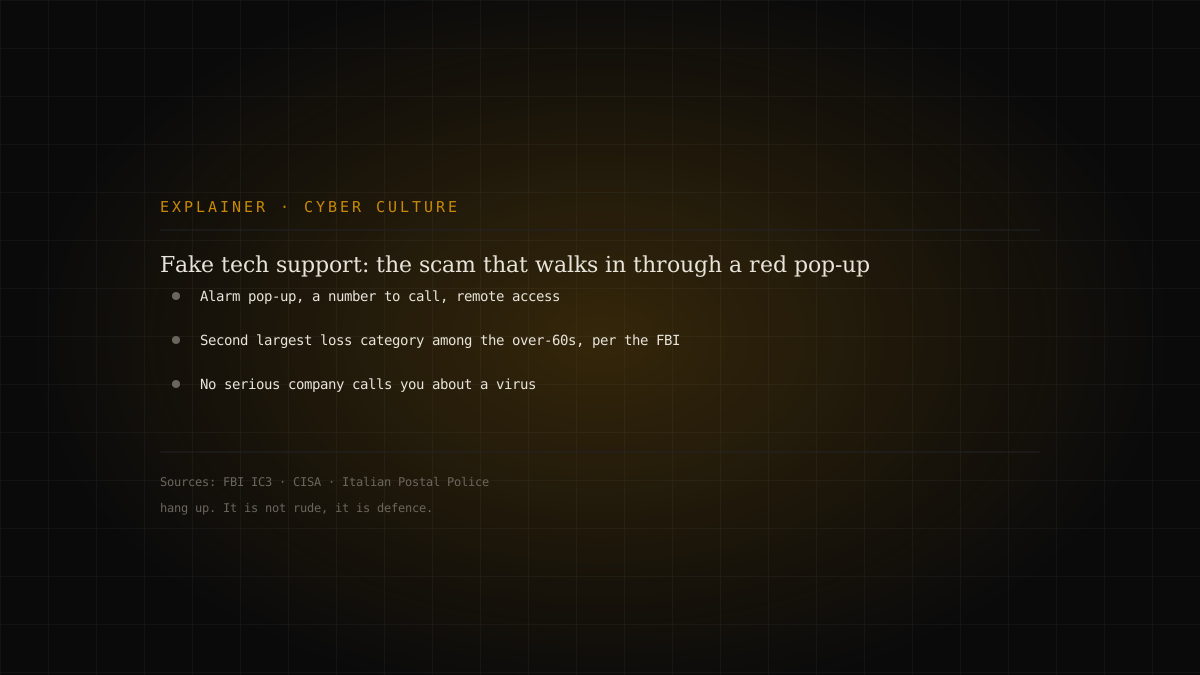
A red window appears saying the computer is infected, with a number to call. Whoever answers is polite, competent and in a hurry. Within twenty minutes they have remote control of your computer, your accounts open in front of them and a plausible explanation for everything they ask you to do. According to the FBI, tech and customer support scams are the second largest loss category among over-60 victims. An explainer on how the scam is built, why it works on careful people too, and what to tell a parent before it happens.

The scene
Someone is reading the news online. The computer plays an alarm sound and the screen fills with a full-page red window: your computer has been infected, do not shut it down, call this number immediately. There is a familiar logo at the top. The close button does not work, or appears not to.
The person who answers the phone is courteous, speaks calmly, gives a name and an operator code. They ask a few technical questions, ask you to open a program to "check the state of the system", and show lines of text scrolling past — often it is simply the Windows Event Viewer, full of entirely harmless yellow warnings — explaining that each of those lines is an infection. Then they ask you to install a remote assistance program, so they can "fix everything from here".
From that moment the person is no longer in charge of their own computer.
Why it works, even on people who are not naive
Reading this, the temptation is to think it could not happen to us. It is worth resisting, because the scam does not exploit ignorance: it exploits three mechanisms that work on anyone.
- 01Urgency"do not shut down the computer", "your data is being deleted right now"
- 02Authoritya known brand, a support number, an operator with a code
- 03Reliefsomeone competent is handling the problem for you
The third is the most underrated. Whoever calls that number is already frightened; the voice on the other end is not perceived as a stranger but as rescue. And once that relationship is established, every subsequent request — install a program, open your bank account "to check there are no charges", do not mention it to the bank because "the investigation is confidential" — arrives inside a frame of trust that has already been built.
There is an even more insidious variant: the scam does not ask for money. It asks you to move it. The operator explains that the account is compromised and the funds must be transferred to a safe account, sometimes faking a mistaken refund to generate guilt. The victim makes a transfer with their own hands, from their own device, with their own credentials: no anti-fraud system sees an anomaly, because technically there isn't one.
The numbers, for scale
The most solid publicly available data comes from the FBI's Internet Crime Complaint Center, which collects complaints in the United States and publishes an annual report.
Two necessary caveats. First: these are US figures, based on complaints received by IC3; there is no directly comparable Italian equivalent, so they should be read as an indication of scale, not as a snapshot of any one country. Second: the under-reporting figure is an estimate based on research into people's willingness to report fraud, not a measured value — and that should be said, because it is exactly the kind of number that circulates while losing the "estimate" label along the way.
The qualitative point stands, and it is hard to argue with: older victims lose more, report less and in most cases recover nothing, because the money leaves the banking system within hours.
The three sentences to remember
If you have to explain this scam to a parent, technical explanations are not what is needed. Three rules that always hold are.
No serious company calls you to say you have a virus. Not Microsoft, not Apple, not your provider, not your bank. None. If you get a call like that, the call is the problem.
A number that appears in an alarm window is not a support number. It is part of the message, and the message is fake. Support numbers are found on the official site, typed by hand, never clicked.
Nobody genuinely helping you asks you not to tell anyone. The request for secrecy — "don't mention it at the bank", "don't tell your son until we're done" — is the most reliable signal there is. A legitimate request survives you talking about it with someone else.
If it has already happened
The first hours matter more than everything else. Disconnect the device from the network and uninstall the remote assistance program that was installed. Call the bank using official contact details — not a number given during the call — to block cards and request reversal of any transactions. Change the passwords of your main accounts from a different device, not the compromised one. And report it: to the Postal Police in Italy, or to the competent authority in your country.
Finally, it is worth saying the one thing no leaflet ever writes: falling for this scam is not a sign of naivety. It is built by people who do it professionally, every day, improving the script each time. Shame is why most victims never talk about it, and that is exactly what the scammers count on. Talking about it before it happens, within the family, remains the most effective defence and the cheapest of them all.